
If you were hoping to sell your home in the Greater Toronto Area last year, you only had about a 50:50 chance of success, new HouseSigma data has found.
In what was the slowest home sales year on HouseSigma’s 23-year record, almost half of homes that were listed for sale in 2025 did not end up selling. Some 47% of unique home listings either expired, or were terminated, or are still for sale.
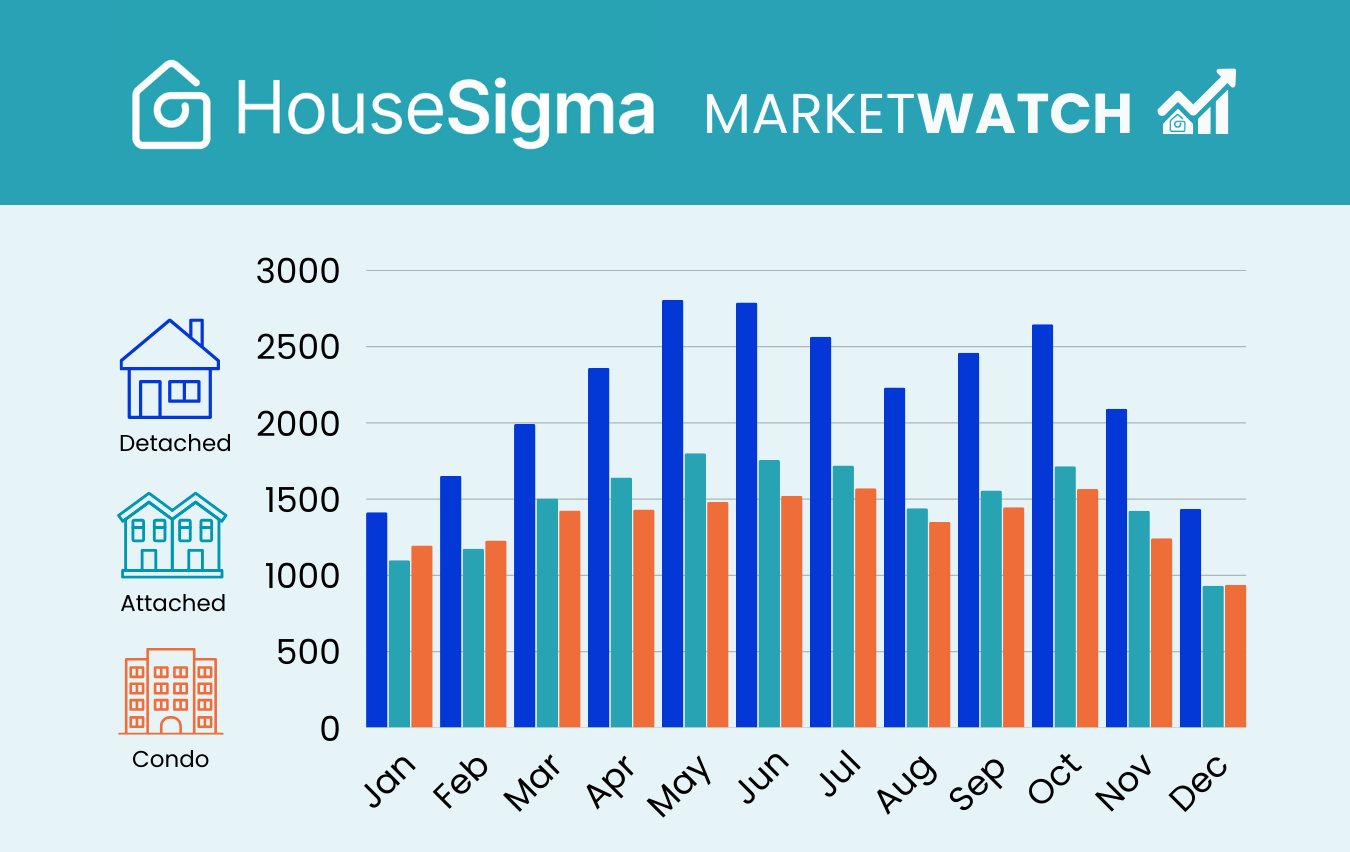
The GTA saw only 60,597 residential resale transactions in 2025, which is the lowest on HouseSigma’s 23 years of records, less than half that of the peak in 2021, as well as being down nearly 12% from 2024, and even lower than the financial crisis year of 2008 (see graph in infographic below). The Toronto Regional Real Estate board reported that the last time sales were lower than this was in 2000, at just over 60,000 sales.
There were 181,477 new listings on the market across 2025, although not all those were unique properties, as some were delisted and relisted. The number of unique homes listed was 110,564, of which 52,426 did not sell.
This increase in supply combined with falling sales put downward pressure on the median price of a GTA home sale in 2025, which was down 4% year over year to $925,000.
Since 2016, HouseSigma has been tracking “property days on market” in the region, which measures the average total number of days a property (all home types combined) has been for sale, including if it was delisted and quickly relisted. This monthly figure was higher in 2025 than all of the previous years on record, and culminated in a record high in December 2025 of 87 average property days on market.
Sammy Kohn, a leading HouseSigma agent in the Greater Toronto Area, commented, “Low sales don’t mean a broken market—they signal a transition. Buyers finally have some leverage, and sellers who adapt early are the ones still getting deals done. This is one of the most interesting moments I’ve seen in Toronto real estate in years.”
Check out the full-year 2025 GTA infographic for more details, below.

Find all your market trends data for the Greater Toronto Area here – and keep up to date with our Ontario blog page here.